Same Vaporizer, Wildly Different Hits: How Your Surroundings Are Secretly Running the Show
You've been using the same vaporizer for months. You know your preferred temperature, your go-to herb, your usual pack size. And yet — some sessions just land differently. The vapor feels thicker, the effects seem stronger, the whole experience is just more satisfying. Other times, with all the same variables in place, it falls flat.
You might blame your herb or assume your device is wearing out. But here's the thing: your environment is almost certainly a major factor, and it's one that almost nobody talks about.
Let's get into why your surroundings are quietly influencing every single session you have.
Why Air Isn't Just Air
When you pull vapor through your device and into your lungs, you're not breathing in an isolated substance. You're breathing in a mix of vapor compounds suspended in whatever air is currently in the room — air that carries humidity, temperature, particulates, and even volatile compounds from cleaning products, candles, or cooking.
The composition of that ambient air matters more than you'd think. Your lungs are remarkably good at detecting differences in what you're inhaling, and the experience of vapor doesn't happen in a vacuum (pun intended). The way your respiratory system responds to the whole inhale — not just the active compounds — shapes what you feel.
The Humidity Factor: More Significant Than You'd Expect
Dry air is hard on your airways. When ambient humidity drops below about 30% — common in winter months across much of the US, especially in states like Colorado, Utah, and the upper Midwest — your nasal passages and throat are already working harder to stay moisturized. Inhaling vapor through already-irritated airways can make the experience feel harsher, cause more coughing, and reduce how comfortable you feel settling into a session.
On the flip side, higher humidity (think 50–60%) keeps your mucous membranes happy. Vapor feels smoother, hits feel fuller, and your lungs are better primed to absorb what you're taking in. This is part of why so many people report that their best sessions happen in bathrooms after a shower, or on mild, slightly humid evenings — not just because of relaxation cues, but because the air itself is cooperating.
Too much humidity, though, and things get weird. Extremely humid air (above 70%) can make vapor feel heavy and slightly clammy, and it can actually affect how your device heats if moisture gets into the airpath. Balance is key.
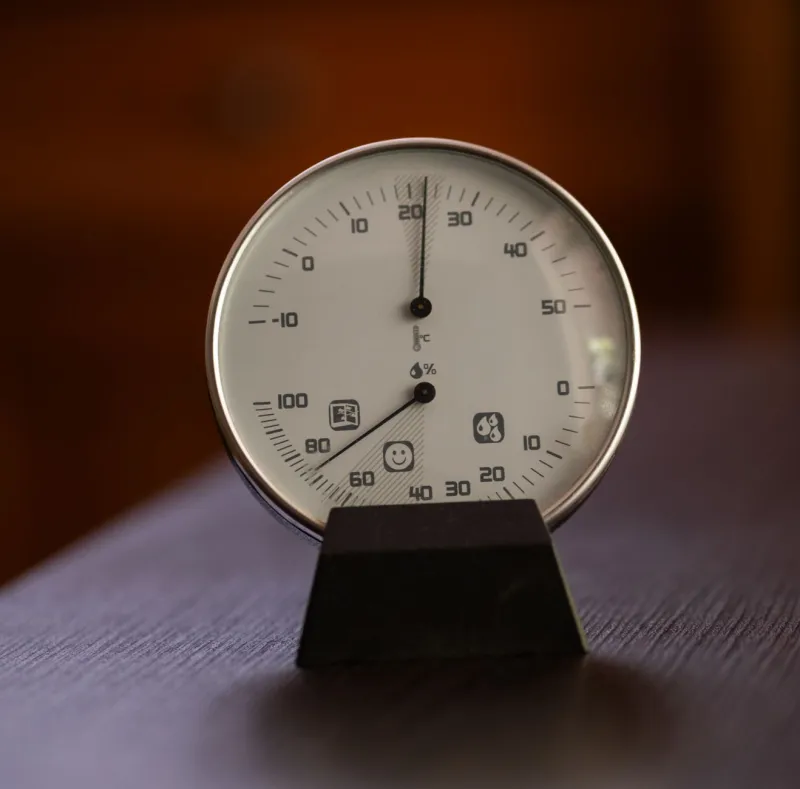
Practical tip: A small room humidifier in your vaping space, set to maintain 45–55% relative humidity, can meaningfully improve consistency. A basic digital hygrometer costs under $15 and lets you monitor it without guessing.
Temperature: Your Room Is Competing With Your Heater
Your vaporizer is working hard to bring your herb to a precise temperature. But that process doesn't happen in isolation — the ambient temperature of the room affects how quickly vapor cools as it travels toward your lungs, and how much thermal energy your device has to expend to maintain its target.
In a cold room (say, a drafty apartment in January), vapor cools faster in transit, which can make it feel thinner and less flavorful. Some compounds that are volatile at vaporizer temperatures may partially condense before they reach you. Cold air also causes involuntary airway constriction in some people, which makes the whole experience feel tighter and less satisfying.
Warm rooms have the opposite effect. Vapor retains more of its character, airways are more relaxed, and the transition from ambient air to inhaled vapor is less jarring. There's a reason so many people prefer vaping in cozy, warm environments — it's not just psychological comfort.
Practical tip: If you're in a cold space, give your vaporizer an extra minute to fully warm up before your first draw. Also consider bumping your temperature setting up by 5–10°F to compensate for faster vapor cooling.
Air Quality and What's Already Floating Around
This one gets overlooked almost entirely. The air in your home carries all kinds of invisible content — dust, pet dander, VOCs from furniture or paint, smoke residue if anyone's ever smoked indoors, cooking fumes, and the output from air fresheners or candles.
If your baseline air quality is poor, every inhale — even of clean vapor — is mixed with that background noise. Your lungs register the whole package, not just the vapor. This can contribute to throat irritation, reduced satisfaction, and even headaches that you might incorrectly attribute to your herb or device.
People who vape in well-ventilated spaces, or who run an air purifier in their vaping room, consistently report cleaner, more enjoyable sessions. An air purifier with a HEPA filter and activated carbon layer doesn't just make your home healthier overall — it creates a better baseline for your vaporizer sessions.
Practical tip: Open a window for a few minutes before a session if outdoor air quality is decent (check AirNow.gov for real-time AQI in your area). If outdoor air is poor, an air purifier running for 20–30 minutes beforehand can make a noticeable difference.
The Lighting and Atmosphere Angle (Yes, Really)
Okay, this one edges into psychology, but it's backed by real science. Your perception of physical sensations — including the intensity of vapor effects — is heavily influenced by your mental state and environmental cues. Bright, harsh overhead lighting activates alertness pathways in the brain. Dim, warm lighting signals to your nervous system that it's time to wind down.
If you're vaping in a high-stimulation environment (bright lights, loud background noise, cluttered space), your nervous system is partly occupied managing that input. Your ability to tune into subtle physical sensations is reduced. The same session in a calm, dimly lit room will often feel more effective simply because you're more present for it.
This isn't a trick — it's how human perception works. Athletes call it being "in the zone." For vaporizer users, it means your environment is either helping or hurting your ability to fully experience what you're consuming.
Building Your Optimal Vaping Environment
Putting all of this together, here's what a genuinely optimized home vaping setup looks like:
- Humidity: 45–55% relative humidity, maintained with a small humidifier in drier months
- Temperature: Comfortably warm (68–74°F), away from drafts or AC vents blowing directly on you
- Air quality: Purified or freshly ventilated, free from strong chemical odors or smoke residue
- Lighting: Soft, warm-toned light rather than bright overhead fluorescents
- Noise: Reduced background stimulation — not mandatory, but helpful for getting the most out of your session
When you're traveling or vaping in less controlled environments, awareness alone helps. Knowing that a dry hotel room or a cold car might be working against you lets you adjust expectations and make small compensations — like staying extra hydrated or giving your device more warm-up time.
The Takeaway
Your vaporizer doesn't change between sessions. Your herb (mostly) doesn't change. But your environment changes constantly, and it's been influencing your results the whole time. The good news is that once you understand what's happening, you're not at the mercy of it anymore. A few low-cost adjustments to your space can take your sessions from inconsistent to reliably excellent — no new device required.